In the industrial chain of logistics transportation and engineering operations, semi-trailers serve as core bearing equipment, and the selection of their categories directly determines the efficiency, safety, and cost control of the transportation link. Currently, there is a wide variety of semi-trailer categories in the market, with the structural design and performance parameters of different models optimized for specific scenarios. Only by understanding the differences between categories and identifying the matching logic can the maximum transportation efficiency be achieved. Relying on years of R&D and manufacturing experience in the semi-trailer field, Shandong Zhimali Vehicle Industry Co., Ltd. deciphers the matching logic behind category differences for the industry, helping practitioners achieve precise vehicle selection, cost reduction, and efficiency improvement.
Category Differentiation: A Refined Response to Transportation Needs
The differentiation of semi-trailer categories is essentially a refined response to transportation needs. Changes in every demand dimension, from cargo characteristics and transportation scenarios to compliance requirements, drive the iteration and upgrading of semi-trailer categories. A technical director from Zhimali stated: “There is no ‘one-size-fits-all semi-trailer’. The core differences among various models lie in three dimensions: load-bearing capacity, protection performance, and loading/unloading efficiency. The key to precise matching is to deeply bind these three dimensions with actual transportation needs.”
Load-Bearing Capacity: Core Adaptation to Cargo Weight & Shape
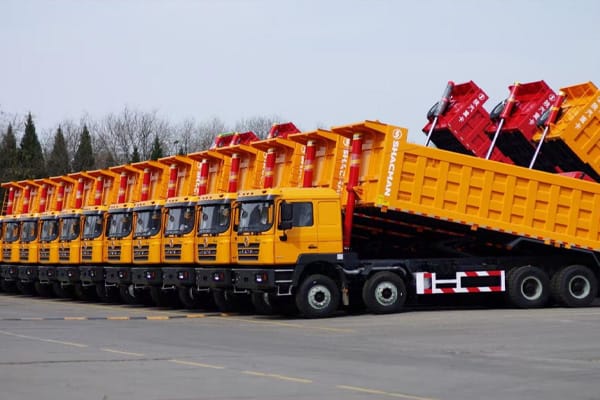
The differentiated design of load-bearing capacity is the core for adapting to the weight and shape of cargo. For oversized and overweight goods such as heavy equipment and steel products, low-bed semi-trailers, with their extremely low platform height and multi-axle load-bearing structure, significantly lower the center of gravity of the cargo and improve driving stability, making them the exclusive model for transporting heavy engineering equipment. Flatbed semi-trailers, on the other hand, feature an open platform and balanced load-bearing performance, adapting to multiple types of cargo such as steel products and general machinery equipment, while balancing versatility and cost-effectiveness. For bulk materials like sand and ore, side-tipping and rear-tipping semi-trailers enhance load-bearing capacity and unloading efficiency through hydraulic self-unloading systems. Side-tipping models are suitable for operations in narrow spaces, while rear-tipping models are more suitable for large-scale transportation in open areas, forming functional complementarity.
Protection Performance: Hierarchical Design for Cargo Safety
The hierarchical design of protection performance corresponds to the safety needs of different cargo. Van semi-trailers with fully enclosed structures can effectively prevent theft, collision, moisture, and contamination, making them an ideal choice for electronic products, precision parts, valuable goods, and fresh cold-chain cargo. Some customized models can improve loading/unloading convenience through side door and tailgate designs. Curtain-side semi-trailers achieve flexible protection through retractable curtains, balancing rain and sun protection with loading/unloading efficiency, and are suitable for medium and short-distance transportation of standardized general cargo such as home appliances and clothing. The fence structure of stake semi-trailers combines protection and breathability, specially designed for bulk cargo requiring ventilation and moisture resistance such as grain, feed, and crops, to avoid cargo mildew and deterioration.
Loading/Unloading Efficiency: Matching Scenario Turnover Needs
Loading/unloading efficiency and scenario adaptability determine the turnover capacity of the transportation link. Container semi-trailers, with standardized locking systems, can quickly connect to logistics hubs such as ports and railways, adapt to standard containers like 20GP and 40HQ, and greatly improve the transit efficiency of cross-border trade and multimodal transport. Tank semi-trailers are customized for special cargo such as liquids, powders, and chemical media, adopting sealed tank designs and dedicated unloading systems to balance efficiency with environmental compliance, suitable for transporting goods such as bulk cement, oil products, and chemical raw materials. Loading/unloading needs in different scenarios further refine the category boundaries of semi-trailers, forming targeted solutions.
Compliance & Customization: Key Considerations for Selection
In addition to core performance differences, compliance and customization needs are becoming important considerations in semi-trailer selection. With the continuous improvement of logistics industry regulations, vehicle compliance is directly related to operational risks. All categories of semi-trailers produced by Zhimali strictly adhere to national regulatory standards, ensuring that vehicle parameters such as load-bearing capacity and dimensions comply with industry norms from raw material selection to production process control. Meanwhile, in response to the personalized needs of different customers, Zhimali provides customized upgrade services, optimizing vehicle structures and adjusting configuration parameters to create exclusive models adapted to specific transportation scenarios, achieving precise alignment between needs and products.
Industry Outlook: Towards Refinement & Customization
Industry experts point out that the semi-trailer industry will move towards refined categories, high-end performance, and large-scale customization in the future. For logistics enterprises and practitioners, grasping the matching logic behind category differences and making comprehensive selections based on their own transportation needs, scenario characteristics, and compliance requirements is the key to enhancing core competitiveness.
Zhimali: Demand-Oriented Total-Scenario Solutions
As a professional semi-trailer manufacturer, Zhimali has always been demand-oriented, deeply engaged in product R&D and process upgrading, covering nine major mainstream categories such as stake, curtain-side, low-bed, and tank semi-trailers, forming a full-scenario product matrix. In the future, Zhimali will continue to focus on technological innovation, further refine category performance, expand the boundaries of customized services, and with more professional products and solutions, help the industry solve vehicle selection problems and promote the high-quality development of the logistics transportation industry towards efficiency, safety, and economy.